MAKING MARKS
Fingers, sticks and paint
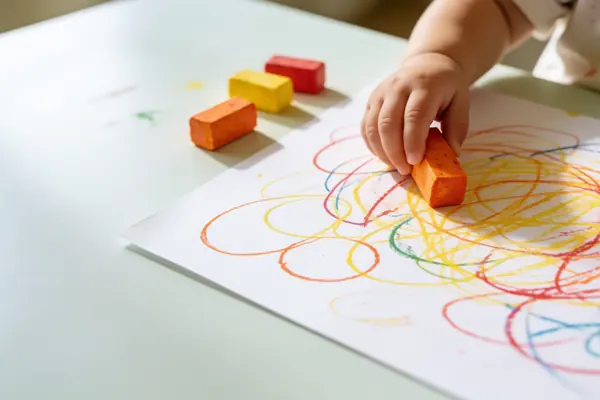
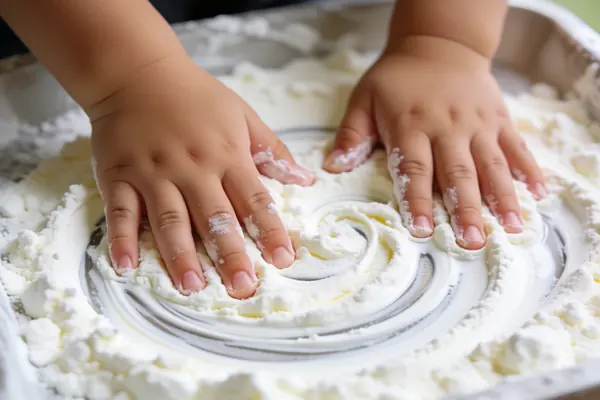
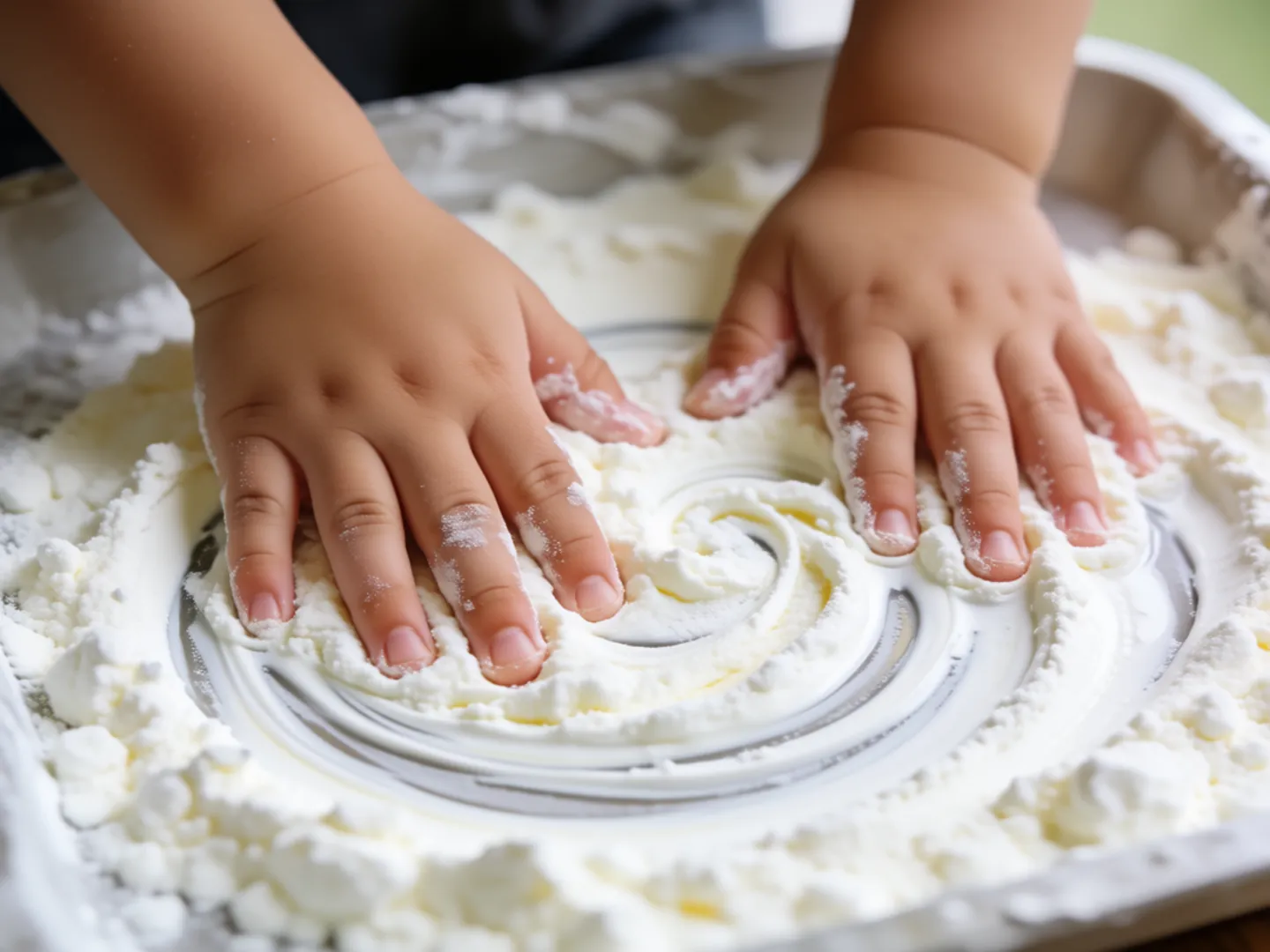
Guidance suggests babies and toddlers make marks in different ways: fingers in cornflour, a stick in the mud, hands and feet in paint.
Follow the stages doodlesr
CHILDREN'S DRAWING, EXPLAINED
Every drawing starts as a mark.
Follow the stages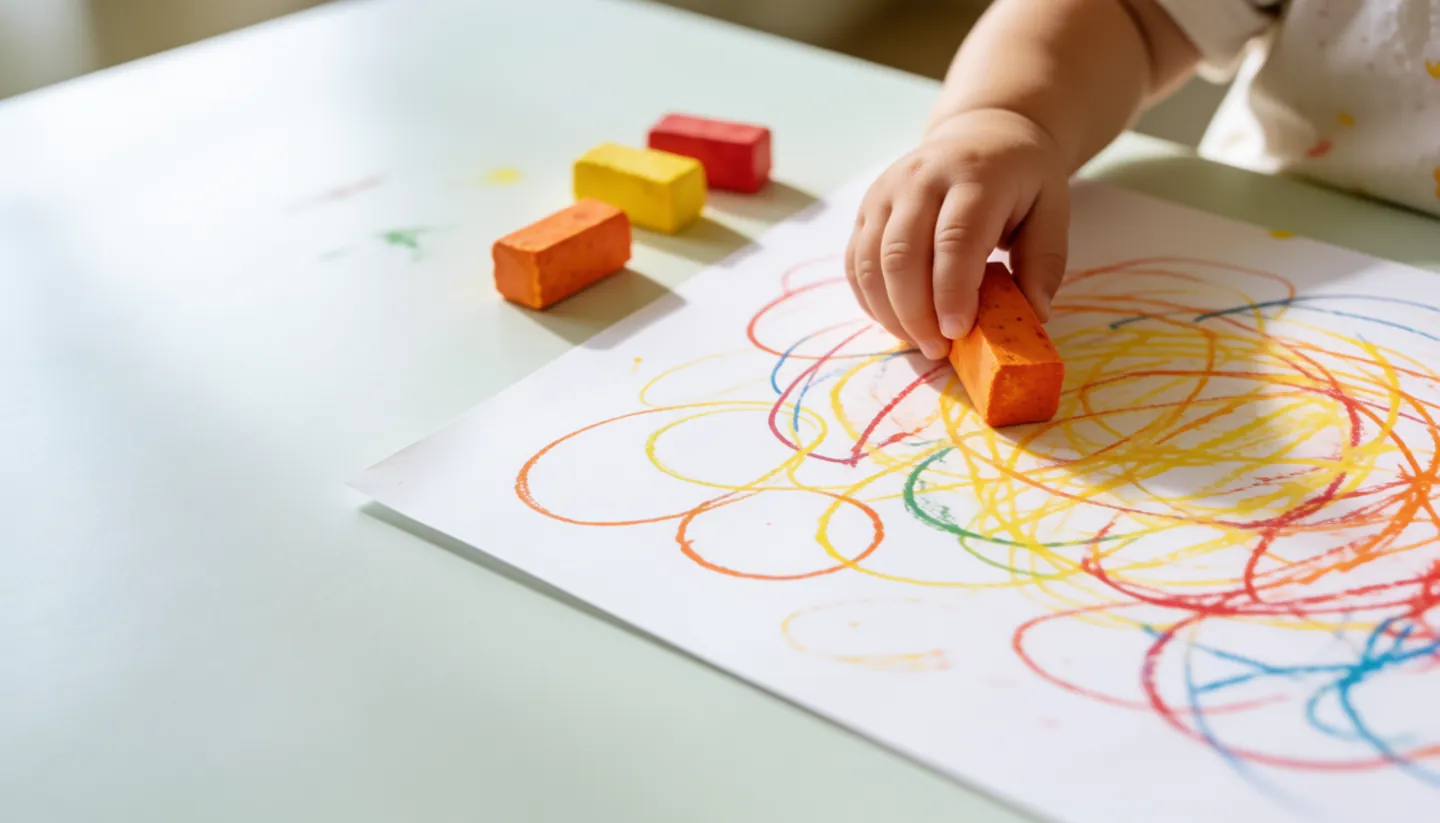
0 TO 12points on the draw-a-child scale
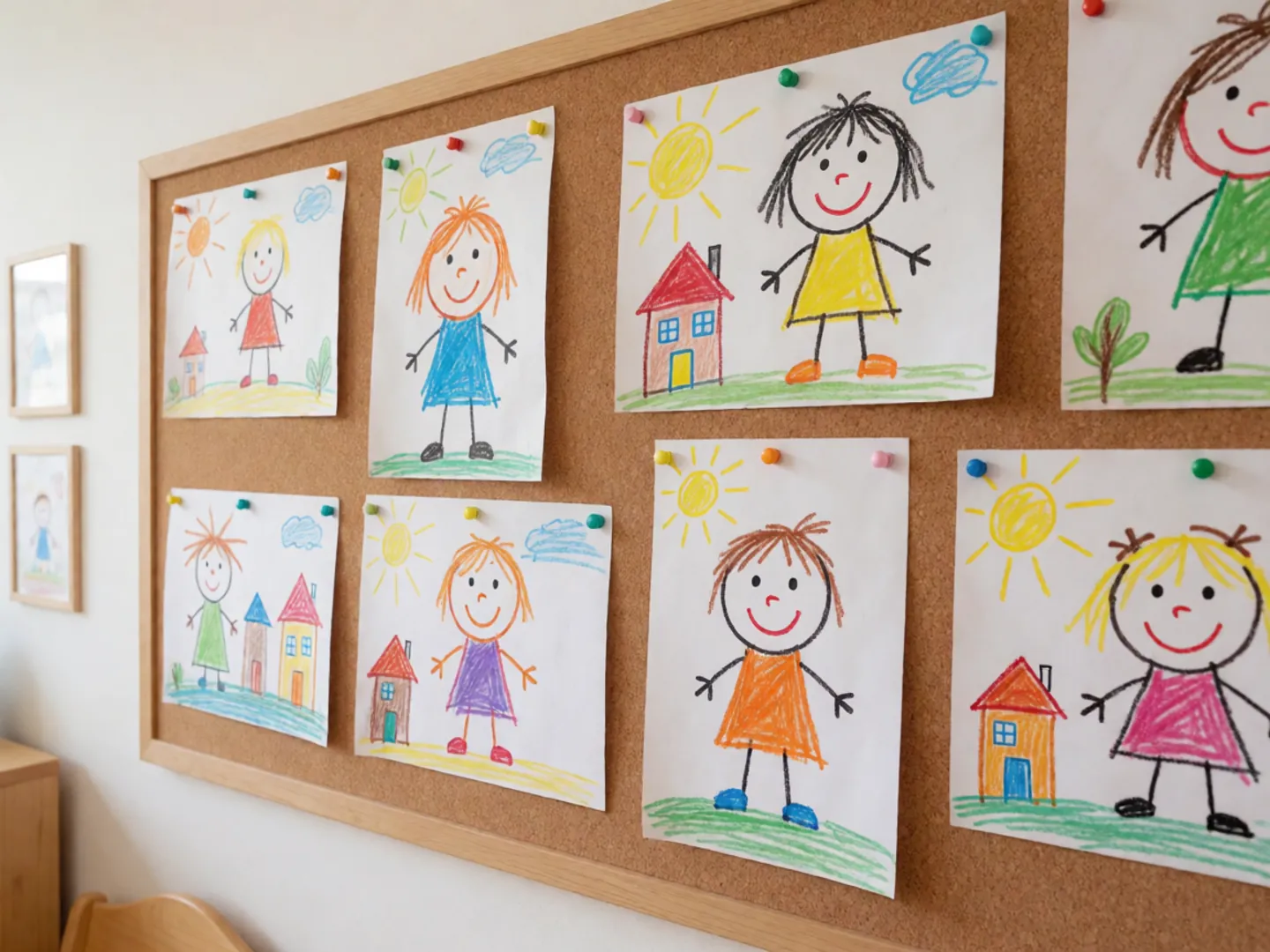
Young children move from making marks with fingers, sticks and paint to closed shapes, faces and figures. England's early years guidance sets out these steps in broad ages and stages, and it stresses that real children are not so neat and orderly.
Updated
THE SHORT ANSWER
The guidance describes broad stages.
The order matters more than the age.
MAKING MARKS
Guidance suggests babies and toddlers make marks in different ways: fingers in cornflour, a stick in the mud, hands and feet in paint.
Follow the stagesSHAPES AND FACES
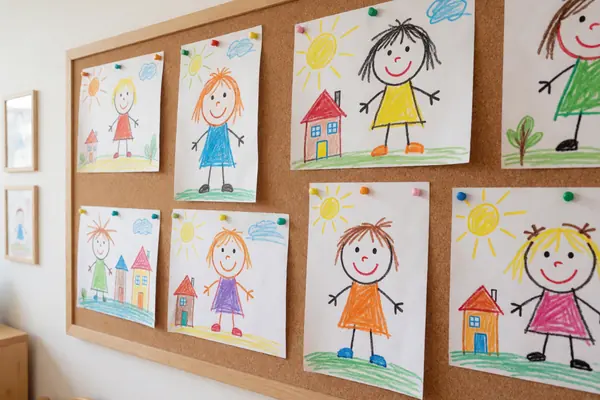
At 3 and 4, children learn to create closed shapes with continuous lines and use them to stand for things, such as a face drawn as a circle with details.
Ways to helpTHE TWIN STUDY
King's College London researchers scored 4-year-olds' drawings of a child from 0 to 12 by body parts included, and followed them up at 14.
See the numbersFOLLOW THE STAGES
Pick an age group to see what England's Development Matters guidance says children will be learning. The bar shows how much detail and meaning the drawings typically carry.
Based on Development Matters (Department for Education). Children develop at different rates; this is general information, not a checklist or medical advice.
TWO NUMBERS WORTH KNOWING
From the King's College London draw-a-child study
published in Psychological Science in 2014.
7,752
Pairs of twins who drew a child at age 4
That is 15,504 children, identical and non-identical twins. Each drawing was scored 0 to 12 by features such as head, eyes, nose, mouth, body and arms.
THE SAMPLE · TWINS EARLY DEVELOPMENT STUDY
0.20
Correlation with intelligence scores at 14
Higher drawing scores at 4 went with higher intelligence scores a decade later, but the link was moderate: 0.33 at age 4 and 0.20 at age 14.
THE LINK · MEDICAL NEWS TODAY
Lead researcher Rosalind Arden stressed that drawing ability does not determine intelligence and that parents should not worry about a child who draws less detail. Identical twins' drawings were more alike than non-identical twins', suggesting genes play some part.
FOUR IDEAS FROM THE GUIDANCE
Development Matters suggests simple ways adults can support early drawing at home or in a setting.
Paint, chalk or mark with water on walls and easels to build large shoulder and arm movements.
Pencils, crayons, chalks and pens, different coloured papers and simple home-made books.
Listen and understand what a child wants to create before offering ideas.
Choose interesting objects to draw and talk about their key features together.
AN OLD TEST
The test used in the twin study goes back to 1926, when psychologist Florence Goodenough at the University of Minnesota asked children to draw a human figure as completely as possible. It was cheap and easy to score.
Arden pointed out that drawing calls on a whole suite of abilities, from observing to holding a pencil, yet produces a simple figure. She called it a way of showing another person something that exists only in your mind.
Questions
Development Matters describes 3 and 4-year-olds learning to draw with increasing detail, such as representing a face with a circle and including details. It stresses that real learning is not so neat and orderly.
Development Matters encourages babies and toddlers to make marks in many different ways and with many materials, exploring them with all their senses.
The King's College study found only a moderate link between drawing at 4 and intelligence scores at 14. The lead researcher said drawing ability does not determine intelligence.
Development Matters describes the tripod grip, with the pen pinched between thumb and forefinger and supported by the middle finger, as comfortable and giving good control.
The guidance suggests both: encourage children to draw freely, and also guide them in structured activities. It advises listening to what a child wants to create before suggesting.
ABOUT THIS NAME
doodlesr.us is part of the DoodleSale portfolio. It isn't in an auction right now, but you can ask about leasing it.